| Key Takeaways |
|---|
| • Fertilize only during the active growing season, roughly April through September in North and Central Florida and nearly year-round in South Florida. • Choose a turf fertilizer with slow-release nitrogen, little to no phosphorus, and potassium. • Check your county's fertilizer ordinance first, since many Florida counties ban nitrogen and phosphorus fertilizer from June through September. |

Most homeowners know to plan lawn fertilization from April to September, when Florida’s warm-season grasses are actively growing. But there is more to getting the lawn fertilization schedule in Florida right.
In this guide, we cover the essentials: fertilizer bans, Florida’s unique soil, the best fertilizer, and how to calculate and spread it correctly for a green, healthy lawn all year round.
Getting the timing, product, and amount right takes some know-how. If you would rather skip the guesswork, LawnStarter’s lawn treatment service connects you with local pros who fertilize your Florida lawn by the book.
- The Correct Lawn Fertilization Schedule in Florida
- Lawn Care in Counties With Fertilizer Ordinances
- Test Your Florida Soil First
- The Best Fertilizer for Florida Lawns
- How Much Nitrogen Does Your Grass Need?
- Calculate the Fertilizer Amount in 3 Steps
- Prepare Your Florida Lawn for Fertilization
- How to Apply Fertilizer Like a Pro
- How to Green a Florida Lawn in the Summer
- Reducing Your Lawn’s Fertilizer Needs
- Choose the Right Lawn Care Service
- FAQs
The Correct Lawn Fertilization Schedule in Florida
Fertilize your Florida lawn during the active growing season, when it absorbs nutrients most efficiently: mid-April to late September in North Florida, early April to early October in Central Florida, and nearly year-round in South Florida.
In winter, warm-season grasses go dormant or slow their growth, and fertilizing then feeds winter weeds instead of your grass. Learn more with our winter lawn care tips for Florida.
Here are the best months to fertilize in Florida, depending on your location:
| Region of Florida | First Application | Last Application |
| North Florida and the Panhandle | Mid-April | Mid to late September |
| Central Florida | Early April | Early October |
| South Florida | All year (better in early spring) | All year (better until late November) |
To avoid forced growing, wait 2 weeks after the grass greens up in spring to apply the first round of fertilizer.
Pro tips on your Florida fertilization schedule:
Wait 30 to 60 days after planting a new lawn before applying fertilizer, so the plants can focus on root growth.
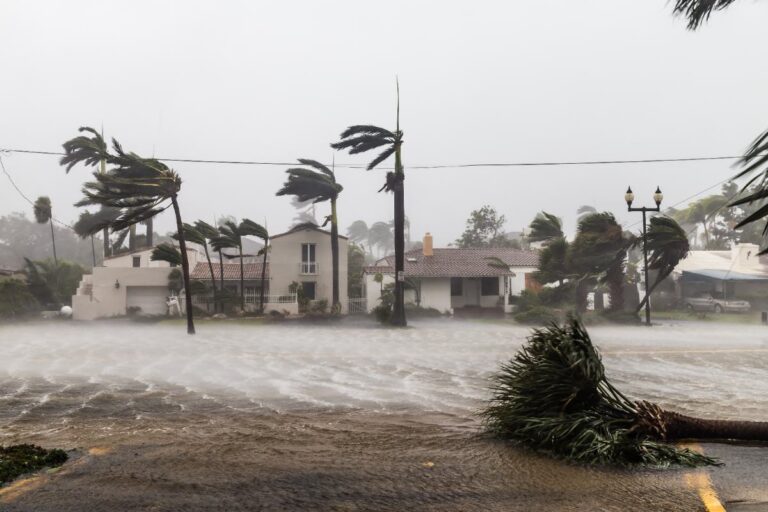
Don’t fertilize when heavy rain is forecast within 24 hours or during a flood, storm, or hurricane warning. Heavy rain washes fertilizer into storm drains.
See Related: When to Fertilize Bahiagrass in Florida
Lawn Care in Counties With Fertilizer Ordinances
Many Florida counties and cities ban nitrogen and phosphorus fertilizers from June to September to protect the local watershed from leaching during the wet season. Use the Florida Fertilizer Ordinances app, developed by the University of Florida (UF), to check the rules for your city and county.
How to Fertilize With a Ban During Summer
Apply a slow-release product in late spring (end of May). It spreads low doses of nitrogen for 3 to 4 months. Fertilize again once the restricted period ends.
See Related: What is Slow-Release Fertilizer for the Lawn?
Nutrients You Can Apply During Summer Even With Bans
You can use nitrogen and phosphorus-free summer blends that contain iron, manganese, potassium, lime, and other allowed nutrients. Compost is another year-round option that is natural and great for soil health. Always test the soil first to confirm these nutrients are needed.
See Related: How to Use Compost in Your Yard
Test Your Florida Soil First
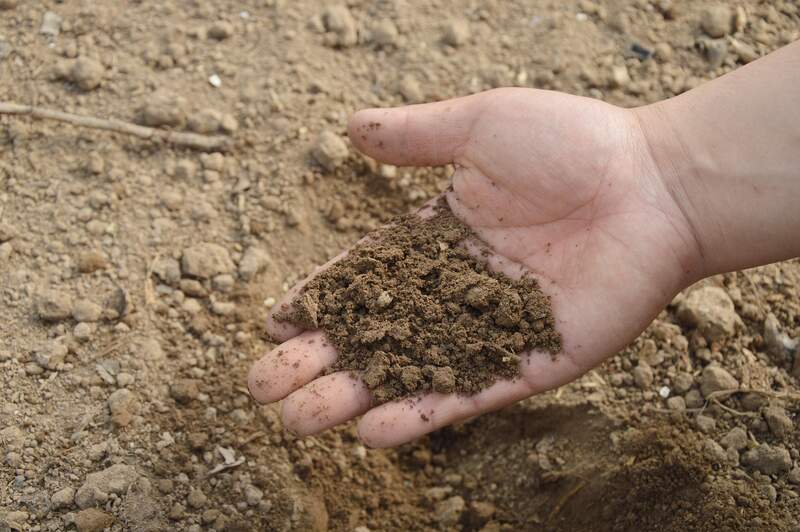
Testing the soil before you fertilize helps you apply the right amount and avoid excess. You have 2 options:
Buy a DIY kit online or at a local garden store for results in seconds.
For a more precise reading, send a sample to the University of Florida soil testing lab and receive a report with detailed fertilizing recommendations.
See Related: How to Test the Soil pH of Your Lawn
The Best Fertilizer for Florida Lawns
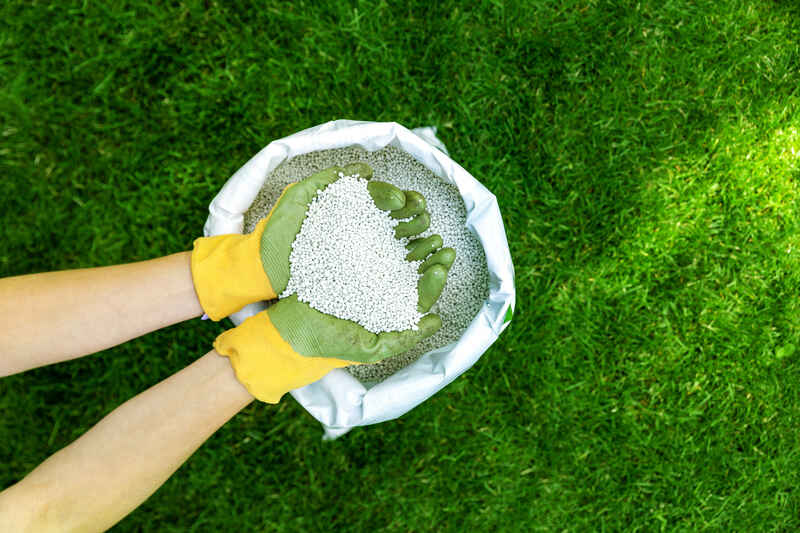
A fertilizer with slow-release nitrogen is the best choice for Florida lawns. Slow-release nitrogen feeds the grass gradually, preventing root burn, excessive growth, and run-off.
It’s also required by law, and the amount varies by county:
If you’re doing lawn care in Orlando, Miami, or a nearby county, choose a product high in slow-release nitrogen, as some local ordinances set a minimum percentage.
Check your county’s rules before buying, since the required share of slow-release nitrogen varies, as our Tampa Bay lawn care guide explains.
Florida soil usually has enough phosphorus but is deficient in potassium (and potassium is crucial for lawns). So choose a fertilizer with little to no phosphorus and potassium at least half the amount of nitrogen.
If your grass slows its growth and lower leaves turn dark green or purple, test the soil, since that can signal a rare phosphorus deficiency.
Pro tips on how to choose a fertilizer for Florida lawns:
Always buy fertilizers made for turf, and look for Florida-friendly products rather than country-wide formulas that carry too much phosphorus.
Avoid weed and feed products. Apply nitrogen fertilizer at least one month after any pre-emergent herbicide instead.
How Much Nitrogen Does Your Grass Need?
Nitrogen is the nutrient we use to calculate fertilizer quantities, and each type of grass in Florida has different needs. Centipedegrass is the most low-maintenance, while Bermudagrass is the hungriest.
Here are the annual nitrogen amounts per 1,000 square feet recommended by the University of Florida for the most common Florida turfgrasses.
| Type of Grass | Region of Florida | Annual Nitrogen (lbs per 1,000 sq. ft.) |
| Bahiagrass | North | 1 to 3 |
| Bahiagrass | Central | 1 to 3 |
| Bahiagrass | South | 1 to 4 |
| Centipedegrass | North | 0.4 to 2 |
| Centipedegrass | Central | 0.4 to 3 |
| Centipedegrass | South | 0.4 to 3 |
| St. Augustinegrass | North | 2 to 4 |
| St. Augustinegrass | Central | 2 to 5 |
| St. Augustinegrass | South | 4 to 6 |
| Zoysiagrass | North | 2 to 3 |
| Zoysiagrass | Central | 2 to 4 |
| Zoysiagrass | South | 2.5 to 4.5 |
| Bermudagrass | North | 3 to 5 |
| Bermudagrass | Central | 4 to 6 |
| Bermudagrass | South | 5 to 7 |
Excess nitrogen makes grass vulnerable to fungal diseases such as brown patch, Pythium blight, and leaf spot, and weakens its resistance to common Florida pests like chinch bugs and mole crickets.
Many Florida county ordinances limit total nitrogen to 1 pound per 1,000 square feet per application. Split the annual amount for your grass into 2, 3, or more applications spread across the growing season to stay within these limits.
Calculate the Fertilizer Amount in 3 Steps
Once you know your nitrogen target, follow these steps to figure out how much fertilizer to put in the spreader:
Measure the area you need to fertilize, counting only the lawn, not walkways or flower beds.
Calculate the nitrogen for the whole area. At 1 pound per 1,000 square feet, a 2,500 square foot lawn needs 2.5 pounds of nitrogen.
Read the product label. A bag of 8-2-10 fertilizer is only 8% nitrogen, so you must spread more product to reach your nitrogen target.
You can use this fertilizer calculator if you live in Orange County or another county that requires 65% slow-release nitrogen. To measure faster, use a lawn-size app such as Measure My Lawn or Google Maps.
Prepare Your Florida Lawn for Fertilization
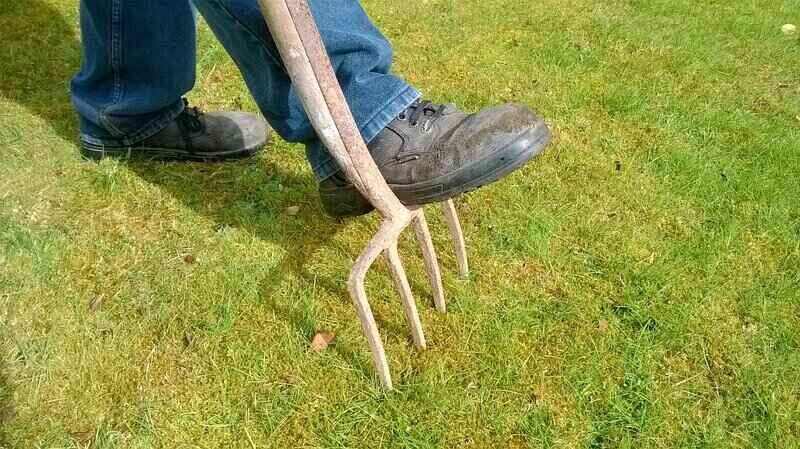
To help the soil absorb the fertilizer:
Clear the lawn of leaves, twigs, and debris, especially under large shade trees.
Reduce compaction through aeration, since foot traffic and heavy Florida rain lower nutrient absorption.
Remove thatch thicker than 1/4 inch, the layer of dead stems and roots that Bermudagrass and St. Augustinegrass are especially prone to.
See Related:
How to Apply Fertilizer Like a Pro
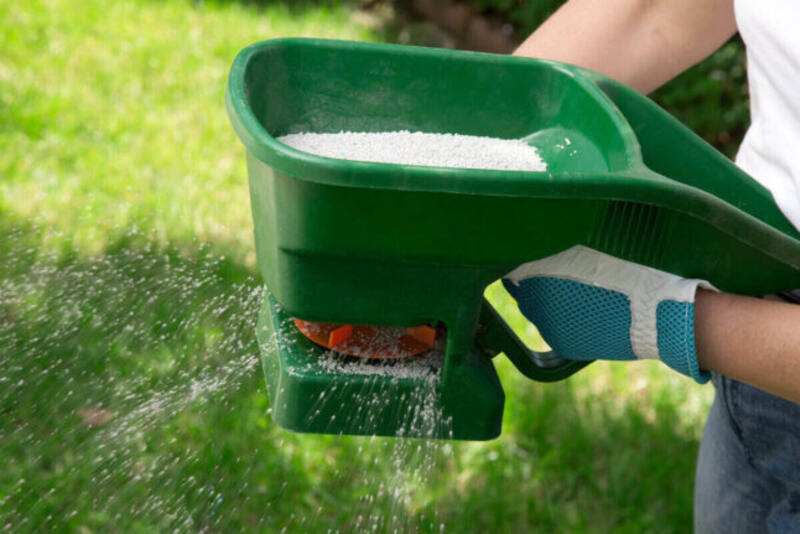
To avoid root burn, spread the fertilizer uniformly. The easiest way is with a broadcast spreader:
Read the label and set the spreader accordingly.
Split the fertilizer in two and add one half to the hopper.
Run the spreader back and forth across the width of the lawn.
Add the second half and spread it along the length, perpendicular to the first pass.
Sweep any fertilizer off the sidewalk or pavement, then apply ¼ inch of water to wash the granules into the soil.
Pro tips about fertilizing the lawn:
Use a deflector shield to keep fertilizer off sidewalks and driveways, and leave a 15-foot buffer of plants native to Florida along any waterfront.
If you spill fertilizer, sweep it up rather than rinsing it away.
See Related: How to Fertilize Your Lawn
How to Green a Florida Lawn in the Summer
When your St. Augustinegrass or bahiagrass lawn fades to light green in midsummer, most homeowners reach for nitrogen, but there’s a better choice. Applying some iron restores the deep green without the extra growth or run-off risk, since a yellowing lawn often signals an iron or manganese deficiency.
For more, read Why Add Iron Fertilizer to Your Lawn?
Reducing Your Lawn’s Fertilizer Needs
A healthy lawn that is mowed and watered correctly needs less fertilizer:
Mowing matters. Cutting too short or too often forces faster growth and higher nutrient demand.
Irrigation matters too. Overwatering encourages shallow roots and excess growth. Water only when the grass shows drought signs, following our lawn watering tips for Florida.
You can also leave the grass clippings on the lawn. The average home generates about 400 pounds of clippings a year, providing a significant amount of slow-release nitrogen.
Choose the Right Lawn Care Service
What happens on your property is your responsibility, so make sure the lawn care professionals you hire follow local ordinances and are trained and licensed for fertilizer application.
LawnStarter pro Chuck Vogt of Metro Lawns in Atlanta, Georgia, warns that do-it-yourselfers often slip up: “They may not apply the fertilizers at the proper time.” Going local is best, since regulations vary from county to county.
See Related: How to Choose Lawn Care Services
FAQs
Yes, as long as each application stays at or below 1 pound of nitrogen per 1,000 square feet and you space them a few weeks apart, respecting any county blackout dates.
Fertilize after rain, not before. Applying before heavy rain washes nutrients into storm drains. Wait until the lawn is dry with no heavy rain forecast within 24 hours, then water lightly to move the granules into the soil.
Wait until the grass has fully greened up, usually about 2 weeks after green-up. In North and Central Florida that is typically mid-April, while South Florida lawns can start earlier. Fertilizing dormant grass mostly feeds weeds.
Yes. Apply about ¼ inch of water after spreading granular slow-release fertilizer to rinse granules off the blades and help nutrients soak in. Avoid heavy watering, which can push nutrients past the roots.
Give Your Florida Lawn the Best Fertilization Year-Round
Soil, weather, and rules make Florida unique when fertilizing turfgrasses, so it is often easier to hire a professional for the whole schedule.
Find a lawn treatment pro near you and get a free quote through LawnStarter, whether you live in Jacksonville, Miami, Tampa, Orlando, St. Petersburg, or anywhere in the Sunshine State.
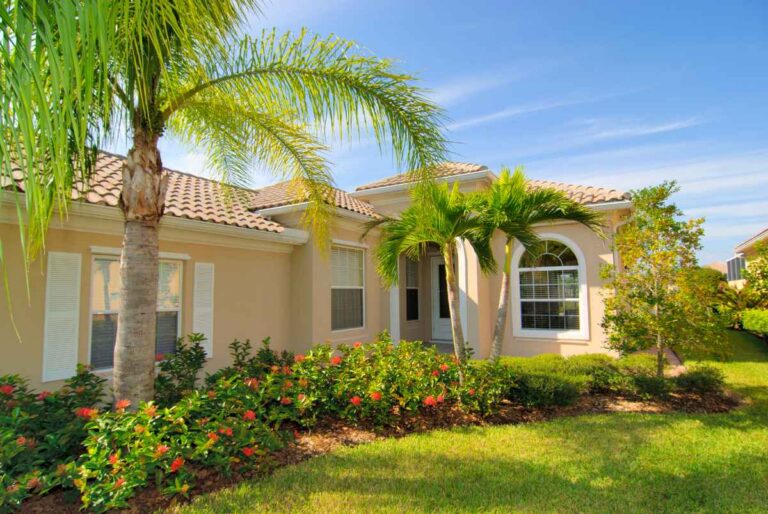
Main Image: Florida house with green front yard. Photo Credit: Pixabay
Related Posts: