| Key Takeaways |
|---|
| • Single-stage snowblowers clear up to about a foot of snow, while two-stage models clear roughly 12 to 21 inches. • Wet snow weighs far more than dry snow, so a snowblower clears less of it per pass and may need more than one pass. • For deep or wet snow a gas-powered two-stage snowblower works best, but for under 2 inches, a snow shovel is usually easier. |
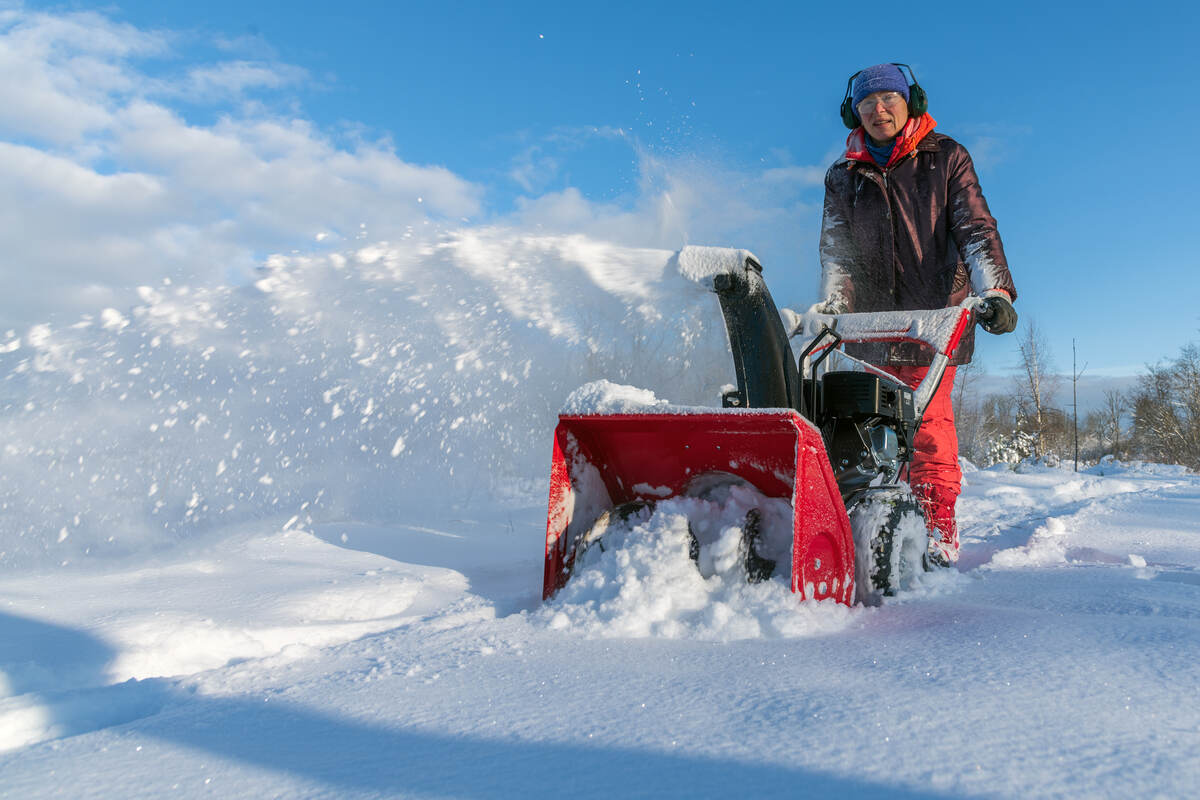
How much snow a snowblower can handle depends on the type of snowblower. Most single-stage snowblowers handle up to a foot of snow, and most two-stage models clear between 1 and 2 feet.
The amount of snow a snowblower handles also depends on the type of snow. Snowblowers clear less when the snow is wet and heavy. Gas-powered two-stage models handle wet snow best, while many electric models make quick work of a few inches of powder.
Clearing snow safely is only half the job. The other half is helping your lawn bounce back once it melts. That is where LawnStarter’s local lawn mowing pros come in.
Types of Snowblowers: Single-Stage vs. Two-Stage
The two main types are single-stage and two-stage snowblowers, and the type sets how much snow you can clear. Single-stage models handle up to about a foot, while two-stage models clear roughly 12 to 21 inches.
Single-stage snowblowers scoop up snow and throw it out the discharge chute in one swoop. Two-stage models clear snow in two steps: The auger scoops snow and passes it to the impeller, which then blows it through the chute.
| Single-Stage | Two-Stage |
| 16 to 24 in. width | 24 to 30 in. width |
| 6 to 12 in. depth | 12 to 21 in. depth |
| 400 to 2,500 snow lb./min. | 1,600 to 3,200 snow lb./min. |
| Throws 20 to 40 ft. | Throws 30 to 50 ft. |
The table above summarizes how much snow each type of snowblower typically handles. Two-stage snowblowers are faster, throw snow farther, and handle deeper snow. Most single-stage snowblowers cost $280 to $770, and two-stage models typically cost $785 to $2,015.
Single-Stage Snowblowers
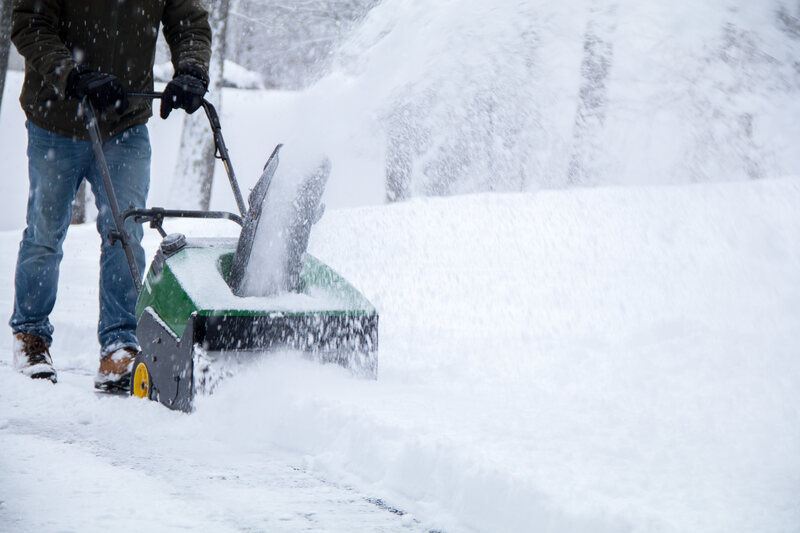
Most single-stage snowblowers have a 16- to 21-inch clearing width, 6- to 12-inch clearing depth, and 20- to 40-foot throwing distance. They plow through 400 to 2,500 pounds of snow each minute.
The table below shows how gas vs. electric single-stage snowblowers differ.
| Gas | Clearing width: 18 to 24 in. Clearing depth: 6 to 12 in. Snow per min.: 1,100 to 2,500 lb. |
| Battery | Clearing width: 18 to 21 in. Clearing depth: 6 to 12 in. Snow per min.: 400 to 1,500 lb. |
| Corded Electric | Clearing width: 16 to 22 in. Clearing depth: 6 to 12 in. Snow per min.: 450 to 800 lb. |
Gas-powered single-stage snowblowers are the fastest and most potent, but high-end battery-powered models compete with mid-grade gas models.
Two-Stage Snowblowers
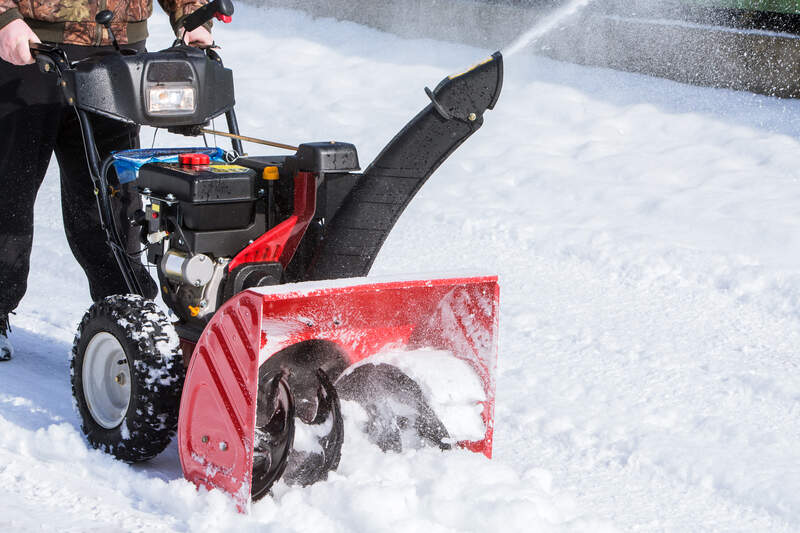
Most two-stage snowblowers have a 24- to 30-inch clearing width, 12- to 21-inch clearing depth, and 30- to 50-foot throwing distance. They plow through 1,600 to 3,200 pounds of snow each minute.
The table below shows how gas vs. electric two-stage snowblowers differ.
| Gas | Clearing width: 24 to 30 in. Clearing depth: 12 to 21 in. Snow per min.: 1,900 to 3,200 lb. |
| Battery | Clearing width: 24 in. Clearing depth: 16 to 20 in. Snow per min.: 1,600 to 2,400 lb. |
Like single-stage models, gas-powered two-stage snowblowers are faster and more potent than electric snowblowers.
Wet vs. Dry Snow Removal
Many snowblowers struggle with wet snow because it is much heavier than dry snow.
| Snow Type | Weight per Square Foot |
| Dry | 4 lb. |
| Normal | 6 lb. |
| Wet | 13 lb. |
The approximate weight of 1 square foot of wet vs. dry snow is shown in the table above.
Removing Wet Snow
To remove wet snow, you need a potent snowblower:
Power source: Most electric motors bog down when handling heavy snow, so the best snowblowers for wet snow are gas-powered.
Snowblower type: Two-stage snowblowers typically have larger engines that can handle more weight. Some single-stage gas snowblowers are good for smaller amounts of wet snow, but two-stage models are much better for several inches.
Clearing depth: The clearing depth of a snowblower is how deep it digs into dry or normal snow. Expect blowers to clear less wet snow with each pass, so it may take more than one pass to clear it all.
Clearing speed: Clearing wet snow is easier if you move slowly, so set self-propelled snowblowers to their slowest speed.
Removing Dry Snow
Dry snow is light and powdery, so it is much easier for a snowblower to handle. Gas and electric single-stage snowblowers handle up to a foot of dry snow. Two-stage snowblowers handle 12 to 21 inches of dry snow.
How to Handle Different Types of Surfaces
We compiled surface-specific snowblowing tips:
Asphalt is susceptible to snowblower damage, so we recommend using a variable-speed snowblower with rubber-tipped blades. If your asphalt driveway has cracks or its protective coating is not intact, salt applications will likely cause further damage.
Concrete is firm but not indestructible. Variable plowing speeds let you moderate force and prevent damage. Natural ice melts are the least damaging, so avoid chemical products and avoid overapplying ice melt.
Gravel is easily dismantled by single-stage snowblowers, which scoop up and throw the gravel along with the snow. Two-stage models with height-adjusting skid shoes scoop higher, avoiding the gravel.
Decking is easily damaged by heavy snowblowers and metal blades. Your best bet is a lightweight single-stage snowblower (or electric snow shovel) with rubber or poly blades.
Pavers are easily scratched, so we suggest a lightweight snowblower or electric snow shovel with rubber or poly blades.
See Related: Ways to Protect Your Lawn From Salt Damage
What if You Have a Lot of Snow?
The best snowblowers for heavy snow are two-stage gas models:
Snowblower type: Two-stage snowblowers clear wider paths of deeper snow, and they are much quicker than single-stage models. For the deepest, wettest snow, three-stage gas models clear the most per pass, handling snow up to about 18 inches deep.
Power source: Gas-powered snowblowers are faster and more potent than electric models, and they give you the best bang for your buck.
Features: Self-propelled snowblowers with power steering and heated grips make removing mass amounts of snow more comfortable. Headlights help if you are clearing snow after the sun goes down.
Is There a Minimum Amount of Snow to Use a Snow Blower?
If there is less than 2 inches of snow on the ground, it will probably be easier to use a snow shovel. We recommend snowblowers to homeowners with at least 20 inches of annual snowfall.
FAQs
Some snowblowers can handle icy or compacted snow. Two-stage snowblowers are typically better equipped for ice, but some single-stage models (e.g., the Toro SnowMaster 724 QXE) work well on icy snow. The shear pins are more likely to break when clearing ice, and it is harder to control a machine over ice, though large tires with heavy-duty tread provide better traction.
A brush attachment works well for light snow, but your best bet for heavy snow is a plow blade or bucket loader. You can buy snow removal attachments for vehicles like riding lawn mowers and all-terrain vehicles (ATVs).
To safely remove snow with a snowblower, keep these points in mind:
• Proper dress: Wear shoes with good traction to prevent falls and avoid loose clothes that can get caught in the equipment. Always wear safety glasses, and add hearing protection if the blower is louder than 85 decibels.
• Proper operation: Point the discharge chute away from people, cars, and fragile landscaping, and keep your hands and feet away from moving parts. Avoid using snowblowers near children and pets, mind the extension cord on corded models, and never start gas models indoors.
• Cleaning clogs safely: Turn off the snowblower when it clogs and make sure all parts, including the blade, have stopped moving. Then use a tool or stick, not your hand, to clear it and prevent snowblower injuries.
• Heart health: Do not over-exert yourself. Between 2003 and 2018, there were 648 snowblower-related deaths, and 647 were from heart attacks.
When to Call a Pro
Snow removal is risky, so we recommend hiring a snow removal pro. Doing so keeps you safe and warm while you wait out the winter months. Once the snow melts, grass needs special care to recover from being covered in ice and snow. To keep your lawn lush, consider one of LawnStarter’s lawn treatment pros in early spring.
LawnStarter connects you to background-checked outdoor service pros. With online quotes and a user-friendly app, getting quality lawn care is as easy as ordering a pizza.
Read More: How to Prevent Snow Mold
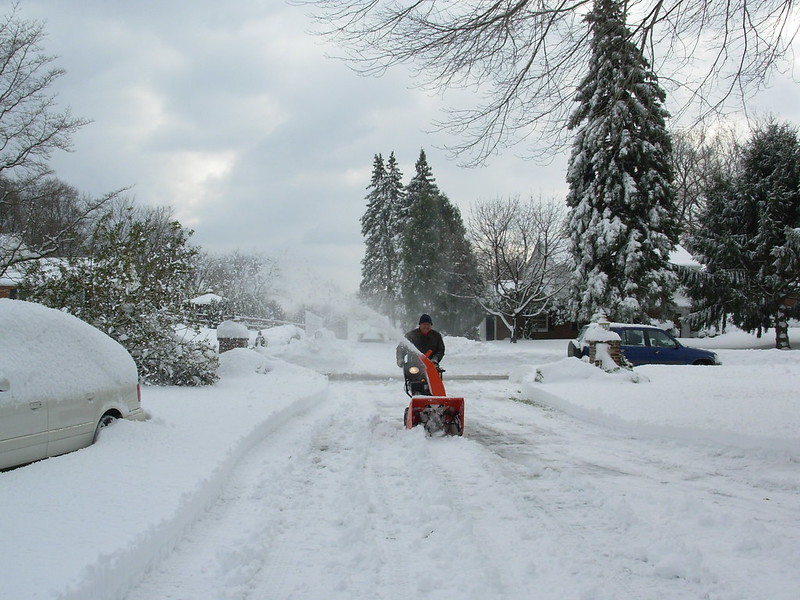
Main Image: Person using a snowblower. Photo Credit: Janis Smits / Adobe Stock
Related Posts: