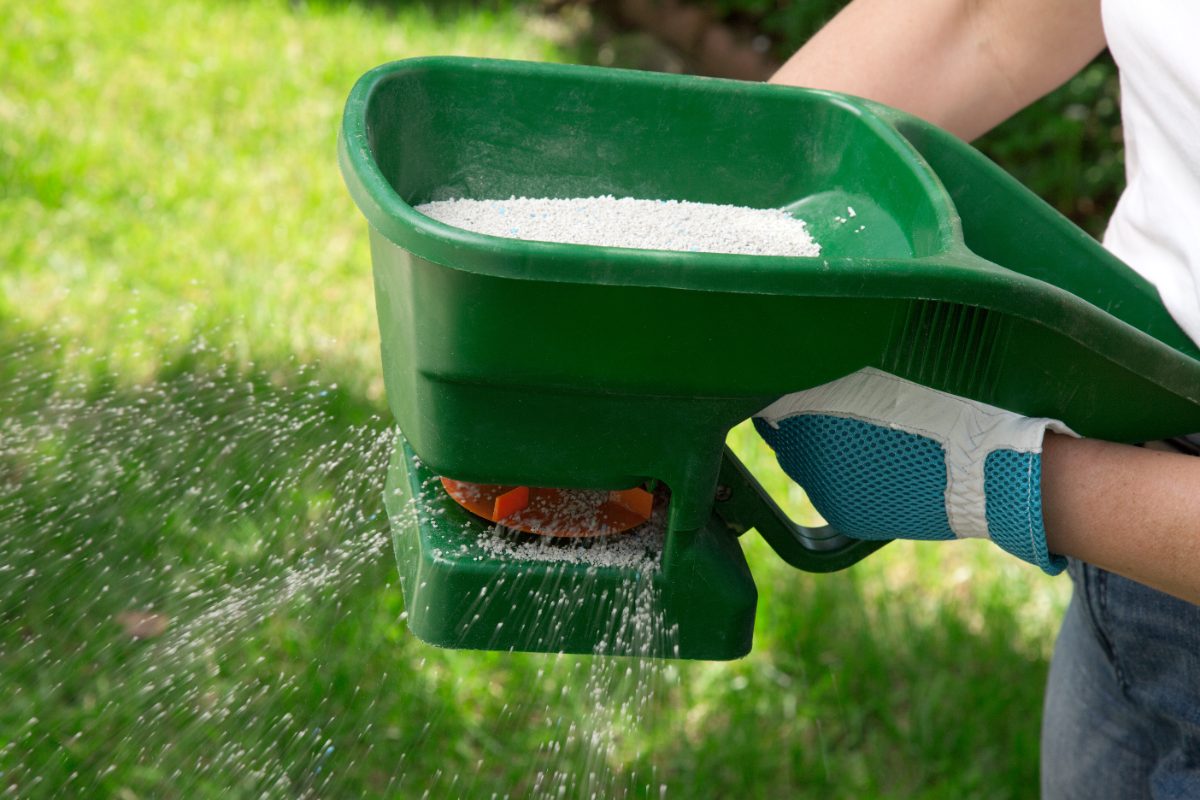
The best fall lawn fertilizer depends on your grass type. Cool-season grasses need a high-nitrogen fertilizer, while warm-season grasses need a potassium-focused product with little to no nitrogen.
Getting this choice right helps your lawn survive winter and emerge stronger in spring. We will walk you through how to choose the best fall lawn fertilizer, from decoding NPK ratios to picking the right product for your turf.
Choosing the right fertilizer means getting the timing, nutrient ratio, and application method right for your lawn. LawnStarter’s fertilizer pros can handle the entire process for you.
| Key Takeaways |
|---|
| • Cool-season grasses need high-nitrogen fall fertilizers in fall. • Warm-season grasses need potassium-focused products with little to no nitrogen. • A soil test is the most reliable way to choose the right NPK ratio for your lawn’s fall fertilizer. |
Why Fall Lawn Fertilization Matters
Fall fertilization helps your turf recover from summer damage, strengthen its roots, and build energy reserves for the cold season. Unlike spring fertilizers that push quick leaf growth, fall fertilizers invest in long-term health with balanced phosphorus and potassium.
The benefits of a well-chosen fall lawn fertilizer extend from fall until the following spring:
Extended color: Prolonged fall and winter green
Winter toughness: Improved cold hardiness and stress resistance
Root strength: Better root growth in fall and spring
Spring head start: Earlier greenup the following year
Bonus benefit: Get the fall fertilization right on cool-season grasses, and you can skip the early spring application and dodge the spring growth spurt that has you mowing twice a week.
See Related: Benefits of Applying Fall Fertilizer to Your Lawn
Understanding Fertilizer Numbers (NPK) For Fall
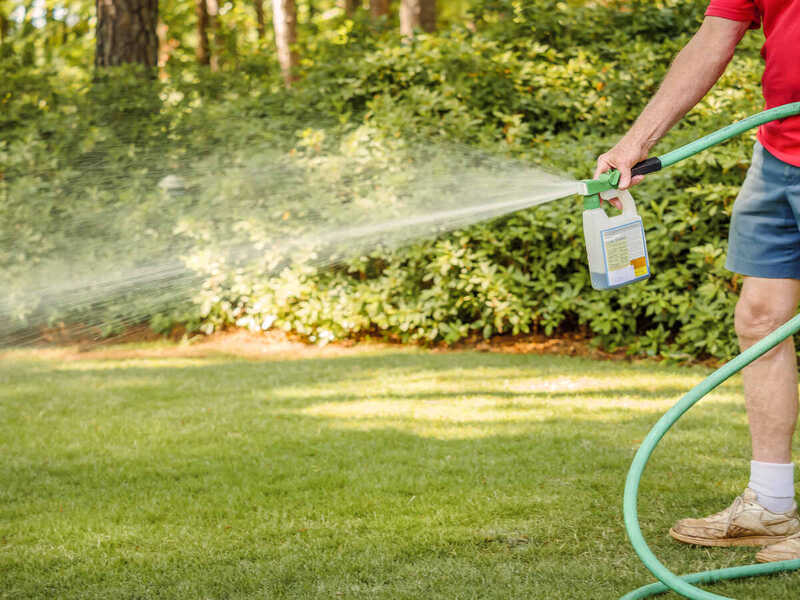
Every fertilizer bag displays three numbers separated by hyphens, known as the NPK ratio. These digits show the percentage by weight of nitrogen (N), phosphorus (P), and potassium (K).
Each nutrient plays a distinct role in fall lawn care. Here is what each one does and why it matters for your grass heading into winter.
| Nutrient | Role in Fall | Watch Out For |
| Nitrogen (N) | Stronger roots, extended green color, faster spring greenup | Too much or too late causes leaf growth instead of dormancy prep, risking winterkill |
| Phosphorus (P) | Root growth and overall plant health | Major water pollutant restricted by many states; use only if soil test shows deficiency or you are overseeding (planting new seed into an existing lawn) |
| Potassium (K) | Winter freeze protection, disease and pest resistance | Do not add if soil already has sufficient levels |
Note: Some states and counties have restrictions on nitrogen and phosphorus. Check the list of cities limiting the use of fertilizers before buying yours.
See Related:
Best Fertilizers For Cool-Season Grass Types

The best fall fertilizer for cool-season grasses is a high-nitrogen fertilizer with the correct amounts of phosphorus and potassium to address soil deficiencies.
Cool-season grasses like fescues, bluegrasses, and ryegrass exit summer dormancy in the fall. They need more nitrogen during this time to maintain color, grow strong, and store energy for next year.
The best strategy is to select your NPK ratio based on a soil test report. Without a test, the University of Missouri Extension recommends these ratios:
| Situation | Recommended Ratio | Example Product |
| No soil test available | 3-1-1, 3-1-2, or 4-1-2 | 16-4-8 |
| Phosphorus restrictions | Zero middle digit | 30-0-12 |
| No K or P deficit | Nitrogen only | 30-0-0 |
Slow-Release vs. Quick-Release Nitrogen
The timing of your application determines which type to use.
Early fall: Use a slow-release fertilizer for sustained feeding over one to two months. Apply up to 1 pound of nitrogen per 1,000 square feet.
Mid to late fall: Switch to a quick-release fertilizer for fast absorption while grass is still active. Apply up to 0.5 pounds of nitrogen per 1,000 square feet to avoid fertilizer burn.
See Related: Slow-Release vs. Quick-Release Fertilizer
Organic vs. Synthetic Fertilizer
Organic fertilizers: Require warm soil and active microbes to release nutrients. They work best in early fall.
Synthetic fertilizers: Ohio State University recommends synthetic nitrogen for late fall, such as urea and ammonium sulfate, which are less affected by cold temperatures.
See Related:
Best Fertilizers For Warm-Season Grass Types
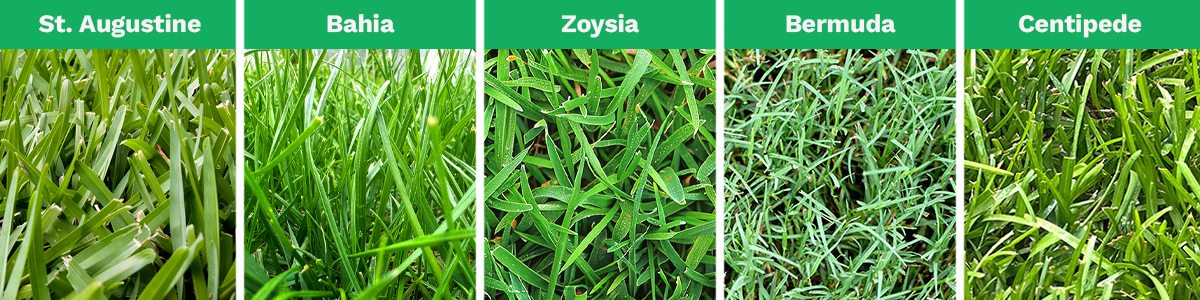
The best fall fertilizer for warm-season grasses contains little to no nitrogen and provides phosphorus and potassium, essential for strong roots and improved resistance to winter stress.
Warm-season grasses like Bermudagrass, Zoysiagrass, St. Augustinegrass, centipedegrass, and bahiagrass grow during summer and prepare for dormancy in the fall. They need nutrients that support this transition rather than encouraging continued growth.
The amount of phosphorus and potassium depends on soil test results:
Phosphorus check: If the soil has sufficient levels, do not add more. Excess phosphorus can interfere with iron and zinc absorption and leach into waterways.
Potassium check: Do not fertilize if the soil already has enough. Experts at the University of Kentucky say the surplus does not help.
If your soil is deficient in potassium, here are recommended fertilizer ratios:
| Type | NPK Ratio | Example Product |
| Potassium only | 0-0-22 or 0-0-60 | Potassium chloride (a common potassium fertilizer) |
| Low-N, high-K | 1-0-2 to 1-0-4 | 10-0-20 or 10-0-40 |
| Complete fertilizer | Approx. 4-1-6 | 12-3-18 |
Avoid applying nitrogen to warm-season lawns after August. Consider nitrogen only if there is a summer fertilizer ban or you live in a warm climate where these grasses stay green late in the fall.
Quick-release nitrogen only: If you must apply nitrogen in fall, use a quick-release product. This ensures fast absorption so your grass enters dormancy on time. Apply 0.25 to 0.5 pounds of nitrogen per 1,000 square feet.
Tip: For prolonged green color in the fall without the risk of dangerous growth, apply an iron fertilizer.
When To Apply Fall Fertilizer
Timing your fall fertilizer depends on your grass type and local climate. The goal is to feed your lawn while it is still actively growing, not after it has entered dormancy.
| Grass Type | Timing Window | Key Notes |
| Cool-season | Mid-August to mid-November | Slow-release early, quick-release winterizer (a late-fall fertilizer that helps grass store nutrients over winter) late |
| Warm-season | Late August to October | Stop nitrogen after August; focus on potassium |
When NOT to fertilize: Do not apply fertilizer to frozen ground, during drought stress, or on a lawn that has already gone dormant. The nutrients will not be absorbed and can wash into storm drains.
For more information on fertilizer timing, check our article: When is The Best Time to Apply Fall Fertilizer?
How To Apply Fall Fertilizer
Choosing the right fall fertilizer is only half the job. Applying it correctly ensures your lawn absorbs the nutrients without waste or damage.
“Sprays are heavily ineffective,” says Scott Culala of The Lawn Cypress, in Gardner, Kansas, which is why most pros prefer granular products.
Broadcast (rotary) spreader: Best for large lawns. It throws granules in a wide arc for fast, even coverage. Overlap your passes slightly to avoid striping.
Drop spreader: Best for smaller lawns or precise applications near garden beds and sidewalks. It drops granules directly below the hopper for more controlled coverage.
Follow these application guidelines:
Never exceed 1 pound of nitrogen per 1,000 square feet in a single application. Check your fertilizer bag for the recommended spreader setting.
Cut your grass to its recommended height before fertilizing. Shorter blades allow the granules to reach the soil instead of sitting on top of the grass.
Lightly water your lawn after spreading fertilizer to wash the granules off the grass blades and into the soil. A quarter inch of water is enough.
Do not apply fertilizer right before a heavy rainstorm. The rain can wash nutrients off your lawn and into storm drains.
See Related: How to Fertilize Your Lawn
FAQs
Yes, you can apply a weed and feed in the fall to cool-season grasses. It feeds the lawn while preventing weeds like henbit and dandelions. For warm-season grasses, use nitrogen-free weed-and-feed products, such as Dimension 0-0-7 or Prodiamine 0-0-7, to avoid delaying dormancy.
See Related: When to Apply Weed and Feed to Your Lawn
Yes, a soil test is the most reliable way to determine which nutrients your lawn actually needs. It reveals your soil’s nitrogen, phosphorus, and potassium levels so you can choose the right NPK ratio instead of guessing. Most university Extension offices offer affordable testing kits.
It depends on your grass type. For cool-season grasses, October is ideal for a winterizer application. For warm-season grasses, October may be too late in cooler climates where the grass has started going dormant. Check whether your lawn is still green and actively growing before applying.
Give Your Lawn The Best Fall Fertilizer
Selecting the right fall fertilizer does not have to feel like guesswork. When every bag label at the garden center looks the same, it is time to call in someone who knows exactly what your grass needs.
Connect with a LawnStarter fertilizer pro near you and skip the guesswork entirely. They will dial in the perfect nutrient mix so your lawn thrives through winter and emerges strong next spring.
Main Image: Fertilizing lawn with handheld spreader. Image Credit: evgenyb / Adobe Stock