| Key Takeaways |
|---|
| • Choose a fertilizer based on your soil test results, grass type, and the current season rather than defaulting to a one-size-fits-all product. • Nitrogen is the most important nutrient for grass, so look for blends close to 3-1-2 or 4-1-2 (as a ratio) for general lawn maintenance. • Slow-release fertilizers are safer and longer-lasting for established lawns, while fast-release options are better for quick green-up or late-fall applications. |
The fertilizer aisle can be overwhelming, with dozens of bags and all the different numbers. But choosing the best lawn fertilizer really comes down to your budget and 3 things about your own lawn: soil test, grass type, and seasonal needs.
This guide walks you through exactly how to match all of them to the right fertilizer type, ratio, and timing.
Want the results without the work? LawnStarter’s lawn treatment pros handle the whole thing for you.
Quick Overview and Our Top Lawn Fertilizer Picks
| If your situation is… | Choose a fertilizer that’s… | Example NPK |
| Established lawn, routine feeding | Slow-release, nitrogen-forward | 3-1-2 or 4-1-2 ratio (e.g., 16-4-8) |
| New seed or sod | High phosphorus (starter fertilizer) | 10-10-10, 16-8-8, 20-10-10 |
| Fall and winter prep | High potassium, low nitrogen | 10-0-20 |
| Quick green-up before an event | Fast-release liquid | 16-4-8 liquid |
| Phosphorus-restricted area | Zero as the middle number | 32-0-4 |
| Soil-building / pet-safe priority | Organic, low nitrogen | 9-0-0 |
Some of our top lawn fertilizer picks:
Best overall: Scotts Turf Builder Lawn Food (slow-release, works on any grass type in any season)
Best organic: Espoma Organic All Season Lawn Food (pet-safe, long-lasting, improves soil)
Best for new lawns: Scotts Turf Builder Starter Food (6 to 8 weeks of feeding)
See Related: 7 Best Fertilizers for Grass
Understanding Fertilizer Numbers and Nutrients
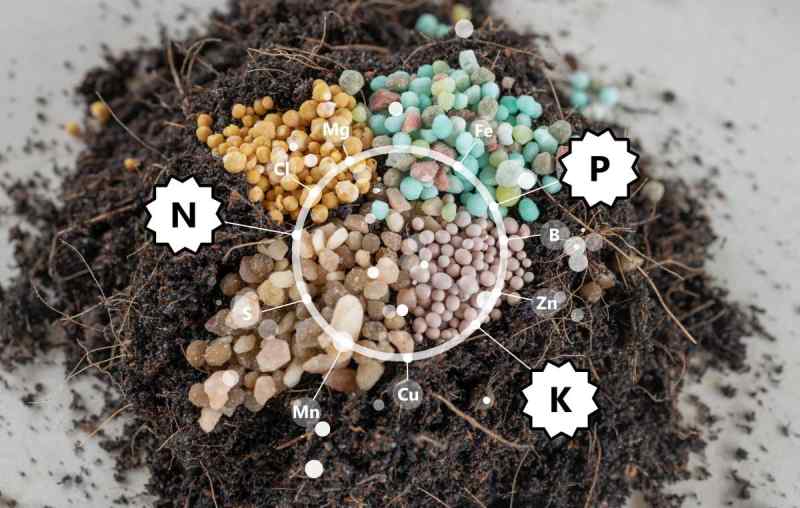
Turfgrass needs 16 nutrients to grow well. Most come naturally from air and water. The 3 you need to manage are nitrogen (N), phosphorus (P), and potassium (K).
Each plays an essential role in plant growth:
Nitrogen (N): Creates healthy, green grass blades and promotes top growth.
Phosphorus (P): Builds deep, strong root systems.
Potassium (K): Improves stress resistance against pests, diseases, drought, and temperature extremes.
Nitrogen stands out because grass consumes it in high amounts daily, so knowing how often to fertilize your lawn during the growing season is key.
What Are NPK Numbers?
The NPK numbers are the 3 large numbers on every fertilizer bag (e.g., 10-10-10). They tell you, in percentages, how much nitrogen, phosphorus, and potassium are inside.
For a 20-4-8 fertilizer in a 5-pound bag: 1 pound nitrogen (20%), 0.2 pounds phosphate (4%), and 0.4 pounds potash (8%).
How to Choose a Fertilizer Using the NPK Numbers
The bag’s NPK numbers are percentages; your soil test recommends pounds per 1,000 square feet.
To match them, turn your recommendation into a ratio: 4 pounds nitrogen, 0 phosphate, 2 pounds potash reduces to 2-0-1 (divide by the smallest non-zero number). Then grab a bag with that ratio or close, like a 20-0-10.
Determine Your Lawn’s Nutrition Needs and Goals
Choosing the right fertilizer for your lawn starts with a soil test.
Conduct a Soil Test
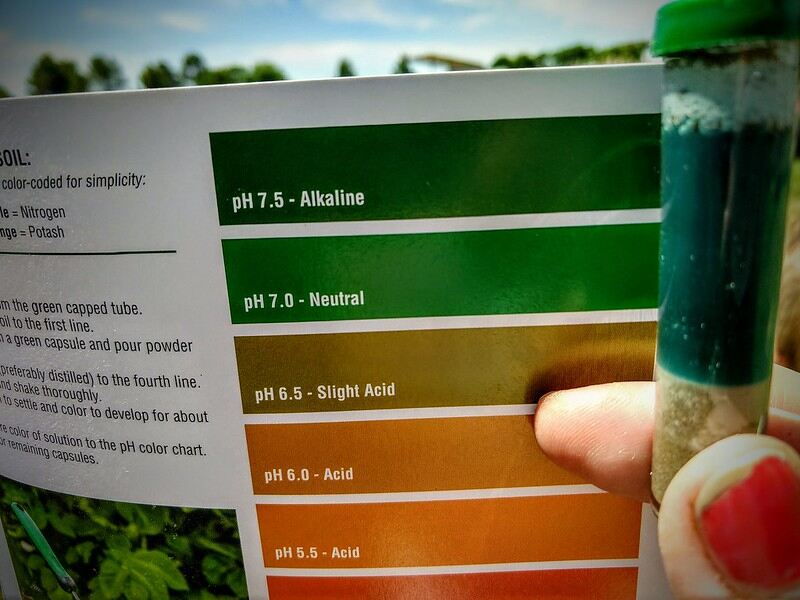
Take a soil sample and send it to your local Extension Office. The results tell you whether your fertilizer needs phosphorus and potassium, and how much. Many tests return a recommended NPK ratio for your grass type.
A basic soil test costs $10-$50 per sample, far less than the cost of buying the wrong fertilizer.
Consider Your Grass Type
Different grass types need different amounts of nitrogen. For heavy feeders like Bermuda, choose a higher-nitrogen bag. If your soil already has enough phosphorus and potassium, pick a nitrogen-only formula.
| Grass Type | Nitrogen/year (pounds per 1,000 square feet) | Notes |
| Bermudagrass | 2 to 5 | Heavy feeder; split N across summer. |
| Kentucky bluegrass | 2 to 4 | Feed spring and fall; skip summer. |
| Perennial ryegrass | 2 to 4 | Feed fall and spring; greens up fast. |
| St. Augustinegrass | 2 to 5 | Don’t overfeed; excess N invites chinch bugs. |
| Tall fescue | 2 to 3 | Mostly fall; spring N worsens brown patch. |
| Fine fescue | 1 to 2 | Low feeder; tolerates shade and lean soil. |
| Centipedegrass | 1 to 2 | Low N, no phosphorus; overfeeding causes decline. |
| Zoysia | 2 to 3 | Feed early-mid summer; go slow to limit thatch. |
Sources: Penn State Extension, University of Georgia Extension. Ranges are typical annual amounts; actual needs vary with climate, soil, and how the lawn is used.
Consider Your Lawn’s Condition
Deficiency signs can mimic disease, drought, or pest damage. If you suspect one, take a soil test or ask your local Extension office before treating.
| Lawn Problem | Likely Cause | Fertilizer Fix |
| Uniform yellowing on older blades, thinner growth | Nitrogen deficiency | High-nitrogen formula |
| Yellowing between the veins of newer leaves | Iron deficiency (chlorosis) | Liquid iron supplement |
| Stunted growth with older leaves turning purple | Low phosphorus | Starter fertilizer with elevated phosphorus |
| Yellowing between veins of older leaves, scorched leaf tips and edges | Low potassium | Potassium fertilizer (e.g., sulfate of potash, 0-0-50) |
Sources: Louisiana Home Lawns Series
See Related: How to Treat Iron Chlorosis in Lawns
Determine the Type of Fertilizer
Organic vs. Synthetic
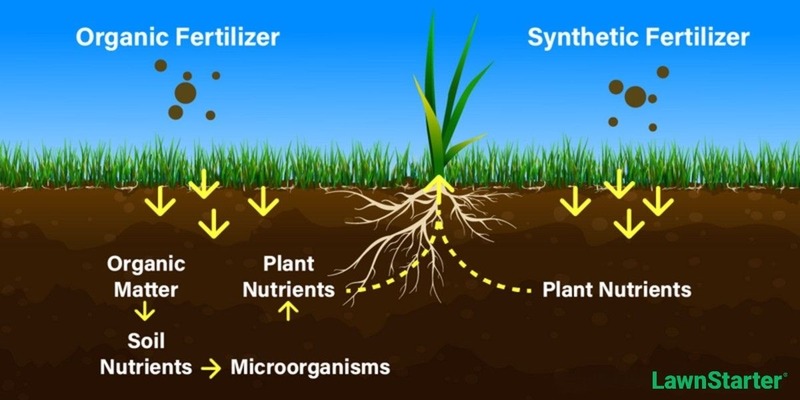
Organic lawn fertilizers are made from natural materials and are gentler on plants and the environment. Synthetic fertilizers are lab-made from inorganic chemicals: more concentrated, faster-acting, cheaper, and more precise, often the better choice for correcting a specific deficiency, but they can deplete the soil over time.
Michelle Zdybowicz, president of Jeden Bioscience in Bakersfield, California, a company specializing in organic fertilizers, biochar, and natural soil amendments, says organic fertilizers’ top benefit is that they build healthier soil.
“They not only provide essential nutrients but also add organic matter, fostering beneficial soil microbes that improve water retention and nutrient availability,” Zdybowicz says.
Synthetics come with a weather trade-off, though: “In wet weather, they can leach away quickly, which is something to watch for. In dry conditions, their effectiveness may drop without additional watering,” she says.
Organics need fewer applications but cost more, roughly $200-$500 per season versus $100-$300 for synthetics, per a LawnStarter organic vs. synthetic analysis.
Fast-Release vs. Slow-Release
Fast-release fertilizers can green up a lawn within 7 to 10 days, but they usually need reapplication every 2 to 4 weeks. Slow-release nitrogen fertilizers can keep a lawn fed for up to 6 months.
Going slower also makes over-fertilizing, and the fertilizer burn it causes, harder to do by accident.
Pro Tip: Leaving grass clippings on the lawn after mowing can provide up to 25% of your lawn’s total fertilizer needs each season.
See Related: Slow-Release vs Quick-Release Fertilizer
Specialty Fertilizers
Starter Fertilizers
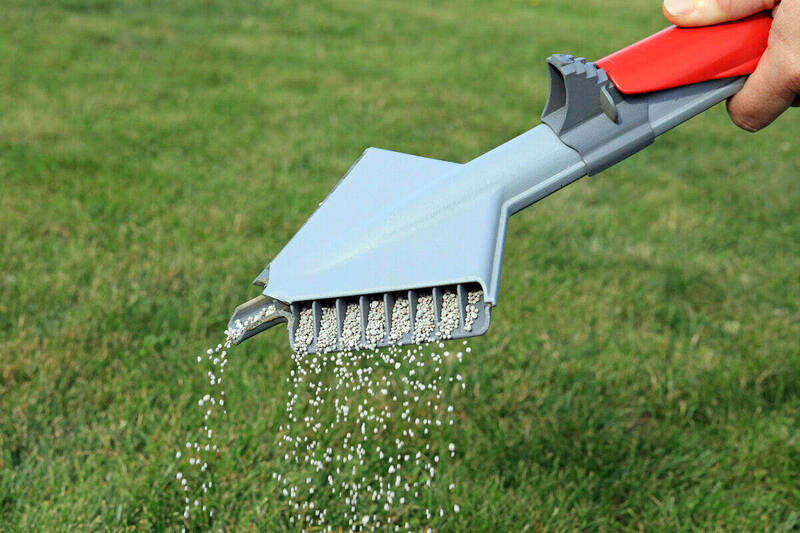
Meant for newly seeded lawns or fresh sod, starter fertilizers help young grass build strong roots. Common NPK ratios include 10-10-10, 16-8-8, and 20-10-10.
Weed and Feed
These combine nutrients with herbicide. Used incorrectly, weed and feed can harm the lawn: the herbicide covers the whole lawn instead of spot-treating weeds, and hitting the right rate for both products is tricky.
Winter Fertilizers
Applied in mid- to late fall, winter fertilizers are higher in potassium to build reserves and improve resilience to winter desiccation and snow mold. Avoid applying nitrogen to warm-season lawns after September 1.
Granular vs. Liquid Fertilizers
Granular fertilizers are usually slow-release; most consumer liquids are quick-release and need reapplying more often.
Granular fertilizers are “ideal for early-season applications,” Zdybowicz says, while liquid fertilizers are “perfect for addressing urgent lawn needs during active growth periods.”
See Related:
Seasonal Considerations
| Season | NPK Ratio | Primary Goal |
| Spring | 3-1-2 or 4-1-2 | Root development, stress resilience |
| Summer (warm-season grasses only) | 20% nitrogen minimum | Support active growth |
| Fall (early) (cool-season grasses) | 3-0-1 (at least 50% slow-release nitrogen and some potassium) | Recovery from summer stress |
| Fall (early) (warm-season grasses) | 0-0-50 (only potassium, no nitrogen after Sept. 1) | Improve winter resilience |
| Fall (late) | 1-0-1 or 2-0-1 | Winter preparation, hardiness |
| Winter | None | No fertilization during dormancy |
Some municipalities enforce fertilizer blackout periods that prohibit nitrogen and phosphorus applications. Most blackouts fall during the rainy season (e.g., June–September in Florida) or when soil is frozen (e.g., November–March in northern states), when runoff risk is highest.
Other Things to Consider
Before you settle on a fertilizer, weigh 3 more things: cost, the time and effort to apply it, and how to avoid nutrient pollution.
Budget
To keep costs down while still feeding your lawn well:
Invest in soil testing to feed your lawn only the nutrients it needs
Choose granular for maintenance; use liquid only for quick fixes
Buy in bulk and recycle grass clippings
Learn to compost garden debris and kitchen scraps
Buy local organic fertilizer
See Related: How to Use Compost in Your Yard
Environmental Impact
Excess phosphorus and nitrogen leaching into waterways harms aquatic life, according to EPA research. Choose slow-release, skip phosphorus unless a soil test shows a deficiency, and never exceed the recommended nitrogen rate.
See Related: A Guide to Eco-Friendly Lawn Care
Local Regulations
At least 11 states restrict phosphorus lawn fertilizers, usually with exceptions for new lawns or a confirmed deficiency. Many cities limit lawn chemicals too. Seasonal restrictions on nitrogen are also common during winter and the rainy season.
FAQs
A 10-10-10 fertilizer is a balanced, all-purpose product that works as a general feed, but it’s rarely the best choice for an established lawn. Most mature lawns need far more nitrogen than phosphorus or potassium, so a nitrogen-forward blend closer to a 3-1-2 or 4-1-2 ratio (like 16-4-8) delivers better results.
For a fast green-up, apply a small amount of liquid fertilizer with fast-release nitrogen, synthetic or organic, such as liquid kelp or fish emulsion. A liquid iron supplement also greens grass quickly by boosting chlorophyll production without forcing a growth surge.
Yes. Fertilizing after mowing helps the product reach the soil. Wait until the grass is dry, avoid scalping (stressed turf burns more easily), water in granular products as directed, and stick to label rates to prevent runoff or over-application.
The cost of fertilizing an average lawn ranges from about $67 to $405, depending on the type of fertilizer and the size of the lawn.
Let LawnStarter Handle It
Local lawn care professionals know exactly what your grass type needs every season. With LawnStarter, you can find trusted local pros through our lawn treatment service and have your turf perfectly cared for.
LawnStarter pros can also help you save time by taking on any lawn care task you would rather set aside, from leaf removal and lawn mowing to aeration and dethatching.
LawnStarter participates in the Amazon Services LLC Associates Program and other retailer affiliate programs. LawnStarter may earn revenue from products promoted in this article.
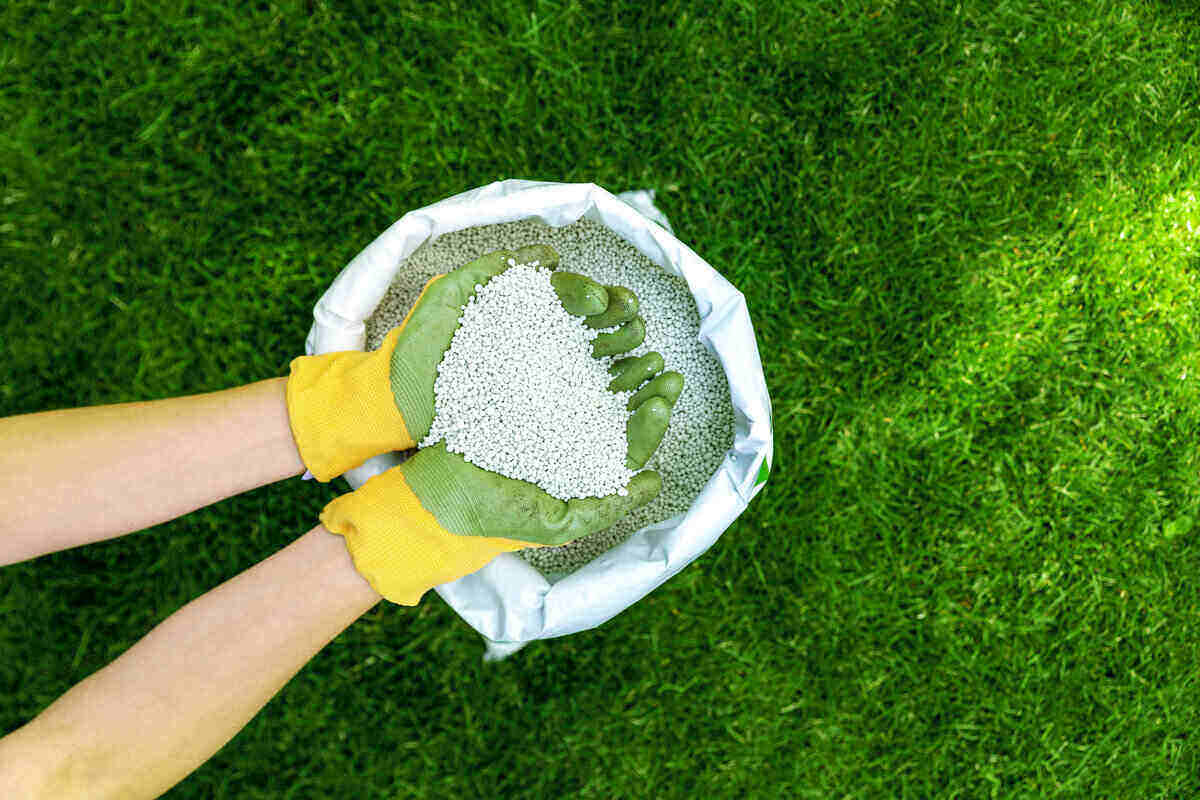
Main Image: A homeowner scoops granular fertilizer from an open bag over a lush green lawn, ready to feed the grass. Photo Credit: fertronstik / Shutterstock
Related Posts: