| Key Takeaways |
|---|
| • Wait 24 to 72 hours before watering, depending on the product: Granular post-emergent weed and feed should be watered 24 to 72 hours after application, while pre-emergent products need water within 3 days. • Product type determines the timing rule: Granular weed and feed must dissolve in water to activate, while liquid formulas are diluted when watered. • Apply in the right temperature window: Spring and fall applications work best when temperatures sit between 60 and 90 degrees. |
Knowing when to water after a weed and feed treatment is what matters most for the product to work properly. The rule of thumb is to wait 24 to 72 hours before watering, depending on the product you used.
A weed and feed treatment can eliminate weeds and feed the turf with healthy nutrients in a single time-saving application. Post-emergent formulas demand extra leaf contact time to work, while pre-emergent products activate only after being watered into the soil.
If weed control and fertilizing aren’t your favorite weekend project, LawnStarter’s lawn treatment services make it easy to hand off and forget about.
Quick Watering Guide
Wait 24 to 72 hours before watering granular post-emergent weed and feed. Water within 3 days for pre-emergent products. Wait 24 to 48 hours for liquid formulas.
Note: If your label says something different, it’s not wrong. Manufacturers fine-tune timing for their specific formula. When in doubt, the label wins.
| Type of Weed and Feed | When to Water After the Application |
| Granular Post-Emergent (or pre- and post-emergent mix) | Wait 24 to 72 hours before watering to allow granules to dissolve on weed leaves. Water is needed for the product to completely dissolve and penetrate the soil. |
| Granular Pre-Emergent | Water within 3 days with 0.5 inch or more to get the herbicide into the soil. Watering is required to dissolve and activate the product. |
| Liquid Weed and Feed | Wait 24 to 48 hours before irrigating the lawn to avoid dilution (check the label). Watering is not necessary to ensure absorption. |
Not sure you want to handle all the timing and product details? Hire one of LawnStarter’s lawn treatment pros to take care of it for you.
Which Type of Weed and Feed Did You Use?
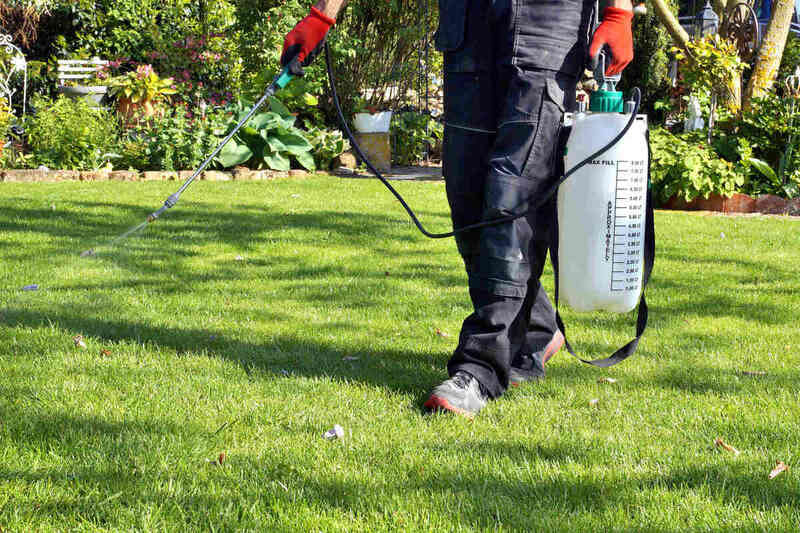
A weed and feed product combines fertilizer and herbicides to control weeds and nourish the lawn in a single application, but the watering step varies by product type.
| Product Type | Key Characteristic | Watering Requirement |
| Granular | Must dissolve in water to activate | Water after 24 to 72 hours or within 3 days |
| Liquid | Absorbs quickly into soil and plants | Wait 24 to 48 hours before watering |
| Pre-emergent | Prevents weed seeds from sprouting | Water within 3 days to activate |
| Post-emergent | Kills existing broadleaf weeds | Wait 24 to 72 hours before watering |
Here’s how the type of product determines when to water:
Granular weed and feed: Must dissolve in water to activate. They work slowly and need time to penetrate the soil. On the upside, granular products have a lower risk of fertilizer burn.
Liquid weed and feed: Delivers herbicide and fertilizer in a solution that absorbs readily into soil and plants. Watering can reduce efficacy, so wait at least 24 hours before irrigating.
Liquid mixes are often undiluted. Follow label dilution rates carefully because overly concentrated solutions can over-fertilize your lawn and burn the grass.
Pre-emergent weed and feed: Works only if absorbed into the soil before weeds sprout. It forms a chemical layer in the topsoil that prevents weed seeds from forming healthy seedlings.
Post-emergent weed and feed: Kills already-grown broadleaf weeds (e.g., dandelions, chickweed, clover, and plantain). They contain selective weed killers that penetrate plants through the leaves. That is why you water before applying this type, not after, so granules stick to wet weed leaves.
Apply weed and feed products in spring and fall when the application temperature is between 60 and 90 degrees. In hot summer conditions, don’t push past 72 hours before watering after a post-emergent granular application.
Prepare the lawn for weed and feed by mowing and lightly watering 1 to 2 days before application if the label calls for it.
See Related:
When to Water After Granular Weed and Feed
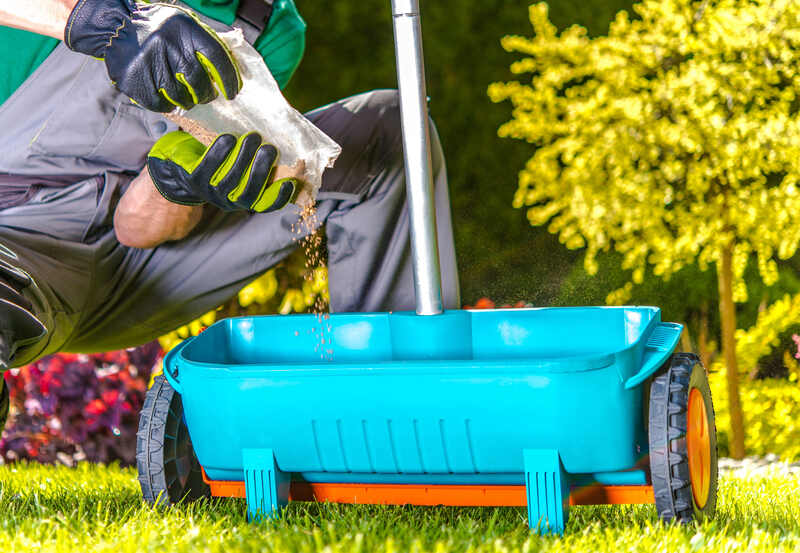
Granular weed and feed? Wait 24 to 72 hours before watering, but the exact rule depends on whether you used a pre-emergent or post-emergent formula. Check the label, then use the sections below to get it exactly right.
Post-Emergent Weed and Feed
The rule of thumb: Lightly water or wait for morning dew before you apply, then hold off on watering for at least 24 hours afterward. This gives the granules time to dissolve on wet weed leaves rather than washing into the soil before the herbicide can work. Check the label for your product’s specific waiting window.
Extension turfgrass specialist David M. Kopec from the University of Arizona says the trick for a correct weed and feed application is to water BEFORE the application.
Spread the weed and feed while the weeds are still wet so granules dissolve on the weed leaves.
If you do it in the reverse order, applying the product first and then watering it in, “the granule will dissolve and wash off down to the soil surface. This can greatly reduce the weed control response.”
Do not water the lawn after treatment so the weed killer can penetrate the leaves. Some manufacturers recommend waiting 24 to 48 hours before watering, others 48 to 72 hours.
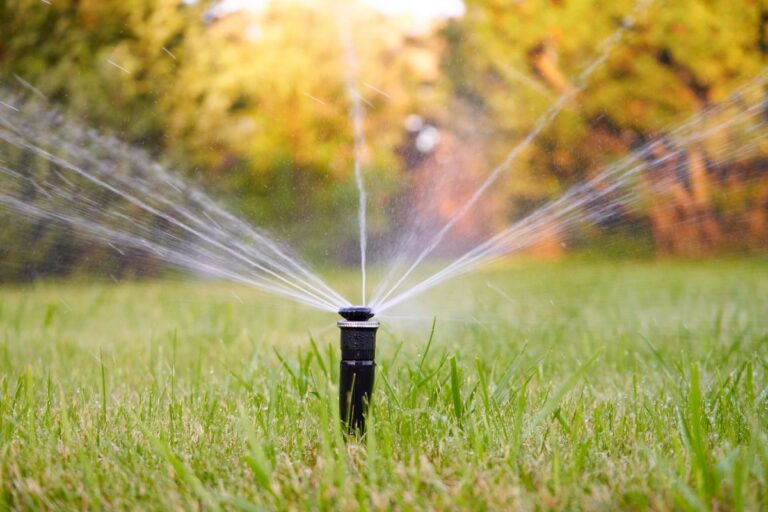
When watering after application, use an automatic watering system for even coverage. A strong jet from a garden hose can wash off the chemicals.
Apply 0.5 to 1 inch of water, depending on the weather, and resist the urge to water every day.
Hot, dry conditions: Apply more water to moisten the soil so the chemicals don’t burn the grass.
Damp, cloudy weather: Apply less water. Overwatering can dilute the chemicals and cause runoff and leaching. Some experts estimate that as much as 50% of irrigation water is lost to evaporation, wind, or runoff.
Pre-Emergent Weed and Feed
The rule of thumb: Apply on dry turf and water the lawn afterward to activate the chemicals. Check the manufacturer’s label to confirm.
According to Kansas State University, pre-emergent products should be watered in with at least a half-inch of water within 3 days after application.
Pre-emergent herbicides (such as crabgrass preventer) must dissolve into the soil and form a chemical barrier before weed seeds sprout.
Natural options like corn gluten meal stay effective for 5 to 6 weeks once activated, according to the University of Nevada, Reno. If you skip watering or wait too long, the product never activates and weeds will emerge anyway.
Weeds already sprouting: Water the same day you apply. You’ll probably need a post-emergent later.
Still early in the season: You can water on your regular irrigation day or wait for the next rain shower.
If you soak the soil, the weed killer and fertilizer are diluted and less effective. You also risk stormwater runoff, leaching chemicals into nearby waterways.
See Related: Best Time to Water Your Grass
When to Water After Liquid Weed and Feed
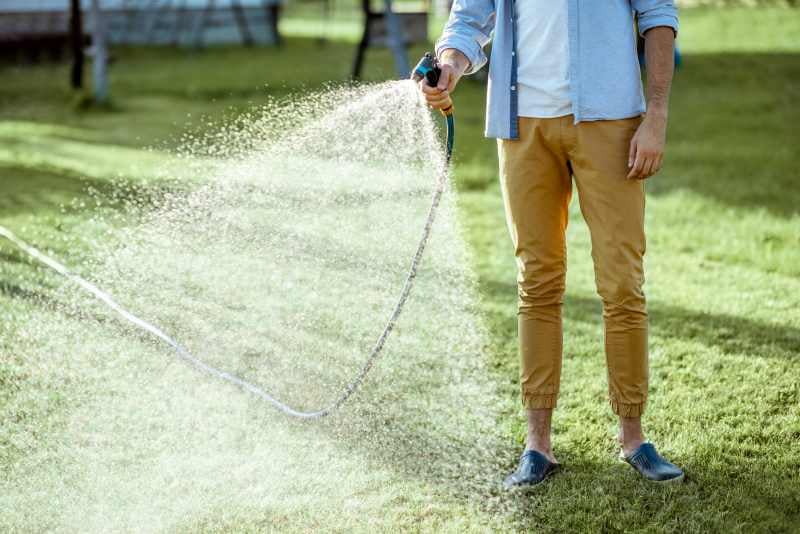
Used a liquid weed and feed? Don’t water for 24 to 48 hours. Unlike granular products, liquid formulas absorb directly into plants and soil. No irrigation is needed to activate them. Just keep the sprinklers off long enough for absorption to complete.
Once the waiting time is over, resume watering your lawn on your regular schedule, applying 1 inch of water per week and adjusting for weather conditions.
See Related: How Often Should I Water My Lawn?
What Happens if You Water at the Wrong Time?
Watering at the wrong time can undermine your weed and feed application in several ways. Here’s why the right watering timing is important:
Activates herbicides: Chemicals in granular form are inactive unless dissolved in water.
Distributes fertilizer: Water breaks granules into microscopic particles and spreads them evenly across the lawn and into the soil.
Helps prevent burning grass: Weed and feed products are rich in salts that can burn grass if concentrated in a single spot. Water dilutes and spreads the chemicals, keeping your turf safe.
What if It Rains After You Apply Weed and Feed?
Rain after applying weed and feed changes your watering plan entirely.
Light rain can be beneficial, helping the fertilizer and weed killer dissolve. Heavy rain may wash out the chemicals before they can act. Watch your lawn for about 7 to 14 days to gauge weed injury, and give the fertilizer longer to show a color response.
Most often, the fertilizer still does its job, but the herbicide is less effective. You might need to apply a weed killer again. If so, target remaining weeds with spot weed spraying instead of a whole-lawn application to avoid loading the soil with unnecessary chemicals.
See Related: Applying Post-Emergent Herbicides to Your Lawn
FAQs
The 3 most common mistakes:
• Watering too soon after post-emergent granular (granules wash off weed leaves before absorbing)
• Skipping water entirely after pre-emergent granular (the herbicide never activates)
• Using a strong garden hose stream instead of a sprinkler (concentrated water pressure displaces granules and creates patchy results). Always use a sprinkler for even coverage.
It is generally recommended to wait at least 24 to 48 hours after applying weed and feed before mowing your lawn. This gives the herbicide enough time to absorb into the weed leaves and the fertilizer time to settle into the soil.
Let LawnStarter Handle Your Lawn Care
Weed and feed saves time, but the application details can be complex. LawnStarter lawn treatment pros handle timing, product selection, and proper application to keep your lawn healthy year-round.
Rely on them for all the necessary lawn treatments, from flawless lawn mowing to aeration and overseeding.
Read More: When to Stop Watering Your Lawn
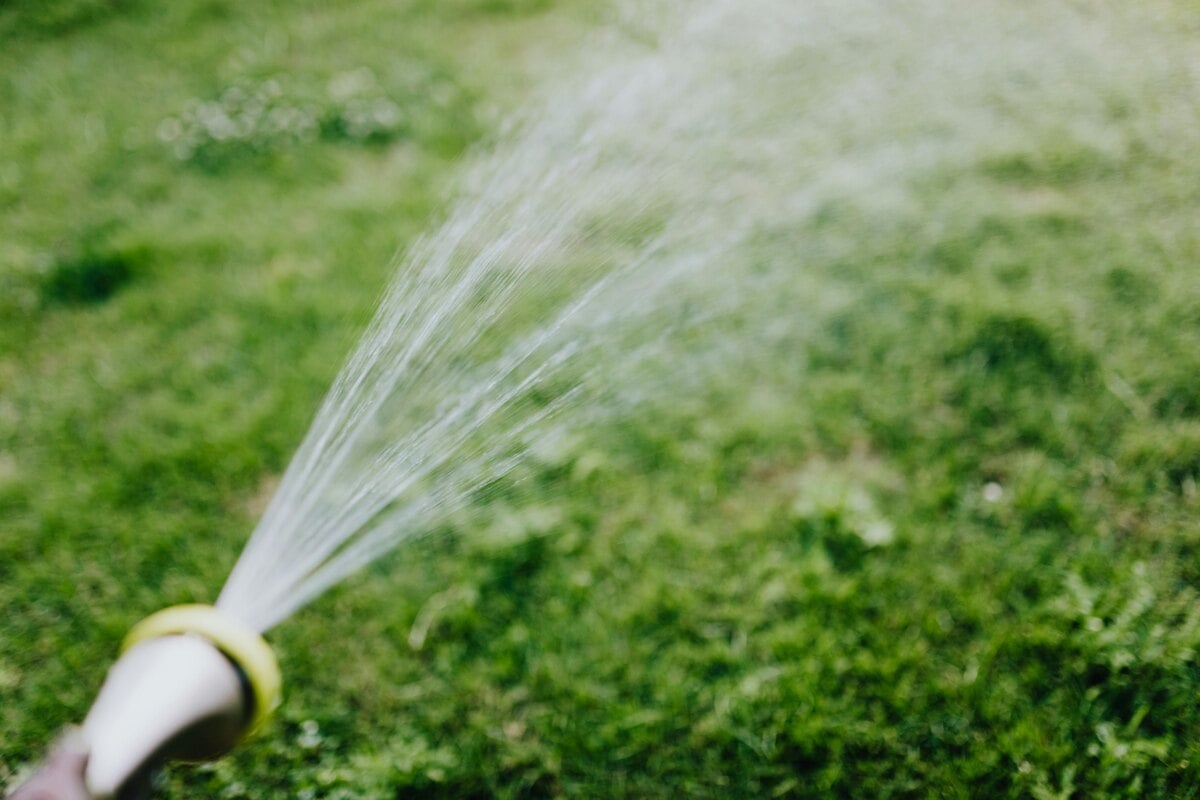
Main Image: A garden hose sprays a wide fan of water across a lush green lawn on a sunny day. Photo Credit: Kaboompics / Pexels
Related Posts: